- Products
- Training
- Lindab Fire Damper Installation Course
- Fire Damper Testing and Inspection Training
- Grease Hygiene Technician Course (GHT) – BESA Short Course
- Grease Hygiene Operative (GHO) – BESA short course
- Air Hygiene Technician (AHT) – BESA Short Course
- Air Hygiene Operative (AHO) – BESA Short Course
- PASMA – Combined Towers for Users and Low Level Access
- Laboratory
- Contact us
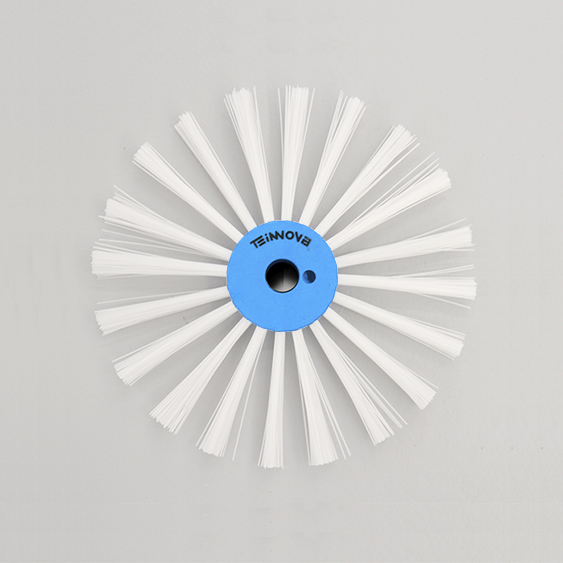
Tecai Nylon Brush
£78.00 – £438.00Price range: £78.00 through £438.00
Dust removal brushes made with nylon bristles. Nylon bristles help to efficiently dislodge dust and debris from the internal surfaces of the duct. Available in a range of sizes to suit Tecai machines, all brush sizes are clearly printed onto the brush centre in black writing to assist the brush operator.
Professional Grade Agitation for HVAC Systems
The brand engineered the Tecai Nylon Brush for dry cleaning air conveyance systems. These brushes use high-quality polyamide nylon bristles. This is unlike aggressive wire brushes used for grease. The chosen material offers the perfect balance of stiffness. It’s rigid enough to agitate and dislodge caked-on dust and construction debris. Meanwhile, it’s flexible enough to navigate bends. This is without damaging the delicate zinc coating of galvanised steel ductwork. It also steers clear of tearing internal insulation liners.
Why Choose Tecai Nylon Brushes?
- Superior “Memory” & Durability: Cheap brushes often splay after one use. Tecai designed their bristles with excellent shape recovery (memory). This ensures they return to their straight position after rotating in tight ducts. This guarantees consistent cleaning pressure and a longer operational lifespan.
- Non-Destructive Cleaning: Essential for maintaining the integrity of air conditioning and ventilation ducts. These brushes provide the mechanical action needed for TR19® Air compliance. This is all without risking structural damage to the system.
- Optimised Aerodynamics: The bristle arrangement spacing is a deliberate choice. It allows airflow from negative pressure units (vacuum collectors) to pass through the brush head. This ensures that the brush pushes dislodged dust away from the working zone.
Seamless Compatibility and Sizing
These brushes are compatible with the Teinnova (Tecai) range of rotary cleaning systems. This includes the Rotair and Element series. They’re the ultimate “Plug and Play” solution.
Selection Tip: For the best cleaning results, we recommend a brush size a little larger than the duct diameter. This ensures the bristles remain under tension against the duct wall. The result is a maximised sweeping action as the shaft rotates.
Ideal For:
- General HVAC maintenance and dust removal.
- Post-construction cleaning of new ductwork.
- Cleaning rectangular and circular ventilation shafts.
- Sanitisation prep (removing dust before fogging).
| Dimensions | N/A |
|---|---|
| Brush Size | Ø100mm, Ø150mm, Ø200mm, Ø250mm, Ø300mm, Ø350mm, Ø400mm, Ø450mm, Ø500mm, Ø600mm, Ø700mm, Ø800mm, Ø1000mm, Ø1200mm, Ø200mm – Ø600mm Pack of 5 Brushes |
Professional Grade Agitation for HVAC Systems
The brand engineered the Tecai Nylon Brush for dry cleaning air conveyance systems. These brushes use high-quality polyamide nylon bristles. This is unlike aggressive wire brushes used for grease. The chosen material offers the perfect balance of stiffness. It’s rigid enough to agitate and dislodge caked-on dust and construction debris. Meanwhile, it’s flexible enough to navigate bends. This is without damaging the delicate zinc coating of galvanised steel ductwork. It also steers clear of tearing internal insulation liners.
Why Choose Tecai Nylon Brushes?
- Superior “Memory” & Durability: Cheap brushes often splay after one use. Tecai designed their bristles with excellent shape recovery (memory). This ensures they return to their straight position after rotating in tight ducts. This guarantees consistent cleaning pressure and a longer operational lifespan.
- Non-Destructive Cleaning: Essential for maintaining the integrity of air conditioning and ventilation ducts. These brushes provide the mechanical action needed for TR19® Air compliance. This is all without risking structural damage to the system.
- Optimised Aerodynamics: The bristle arrangement spacing is a deliberate choice. It allows airflow from negative pressure units (vacuum collectors) to pass through the brush head. This ensures that the brush pushes dislodged dust away from the working zone.
Seamless Compatibility and Sizing
These brushes are compatible with the Teinnova (Tecai) range of rotary cleaning systems. This includes the Rotair and Element series. They’re the ultimate “Plug and Play” solution.
Selection Tip: For the best cleaning results, we recommend a brush size a little larger than the duct diameter. This ensures the bristles remain under tension against the duct wall. The result is a maximised sweeping action as the shaft rotates.
Ideal For:
- General HVAC maintenance and dust removal.
- Post-construction cleaning of new ductwork.
- Cleaning rectangular and circular ventilation shafts.
- Sanitisation prep (removing dust before fogging).
| Dimensions | N/A |
|---|---|
| Brush Size | Ø100mm, Ø150mm, Ø200mm, Ø250mm, Ø300mm, Ø350mm, Ø400mm, Ø450mm, Ø500mm, Ø600mm, Ø700mm, Ø800mm, Ø1000mm, Ø1200mm, Ø200mm – Ø600mm Pack of 5 Brushes |
Related products
Tegras Extreme Grease Brush
£650.00
Tegras Grease Brush – PBT
£81.00 – £445.00Price range: £81.00 through £445.00